Fill out the form below and we’ll follow up to get your proposal in motion.
Step 3
Chat with Us
Lorem ipsum dolor sit amet, consectetur adipisicing elit, sed do eiusmod tempor incididunt ut labore et dolore magna aliqua.
Analytics, Marketing Strategy, Small Business |
9 min read time
Small Businesses & Marketing: A (Dysfunctional) Love Story
Written by Corinne Yank
Most small businesses don’t fully trust in marketing, and a recent Forbes report highlights just how common that feeling is: Only 18% of small business decision-makers say they feel very confident in their marketing.
The number is alarming in and of itself, but it’s just one symptom of a bigger set of problems.
The real issue shows up inside the day-to-day work. Small teams are flooded with tools, scattered reports, and metrics that rarely line up. It’s tough to build confidence in marketing when every dashboard tells a different version of the truth.
That confusion leads to doubt, and doubt quickly turns into the sense that nothing is working the way it should.
The encouraging part is that trust comes back once the picture becomes clear. When analytics track the actions that actually matter, when marketing and sales speak to each other, and when you understand your core numbers as a business, the noise fades out, and the sweet sound of harmony comes in.
This guide explores where trust usually breaks down and how small teams can rebuild it through clarity, focus, and a simpler approach to marketing measurement.
Why Small Businesses Don’t Trust in Marketing
Many small businesses reach a point where marketing feels unpredictable. One week, a campaign brings in leads, the next, it falls flat, and nothing in the data explains the difference. When the results feel random, trust starts to erode.
Most of this comes from how marketing is set up behind the scenes. Small teams often inherit a mix of tools, old settings, partial tracking, and reporting habits that never quite formed a complete picture. The business grows, the tools get more complex, and the clarity gets worse instead of better.
The result is familiar. You look at website analytics and see one version of what happened. Your ads tell a different story. Your CRM adds another. None of them explains what actually created the customer. It becomes difficult to know which efforts matter, which ones to cut, and where to double down.
Trust fades when the systems meant to guide decisions create more questions than answers.
But the problems are fixable, and the path forward is simpler than most teams expect.
Understanding the Confidence in Marketing Gap
Confidence doesn’t disappear because the numbers look bad. It disappears because the numbers don’t mean anything. Most small businesses make decisions without a reliable feedback loop, so every result feels a little uncertain. Wins are hard to repeat, losses are hard to explain, and patterns never seem to stick.
When teams can’t see cause and effect, confidence naturally breaks down. A successful month feels like luck. A slow month feels like a mystery. Over time, that uncertainty turns into hesitation, and hesitation is expensive. It leads to delayed decisions, watered-down experiments, and marketing that plays it safe rather than marketing that grows the business.
The gap also forms because small teams rarely get enough runway to evaluate their work properly. Reporting is squeezed between a dozen other tasks. Tracking gets set up quickly and is never revisited. Tools change, campaigns evolve, and the underlying system never keeps up. Without a stable foundation, it becomes almost impossible to trust what the numbers say.
This is the real confidence gap. It isn’t about performance. It’s about a missing connection between what you’re doing and what those actions actually create. And the first place that connection usually breaks down is in the analytics layer.
What Creates a Lack of Confidence in Online Marketing
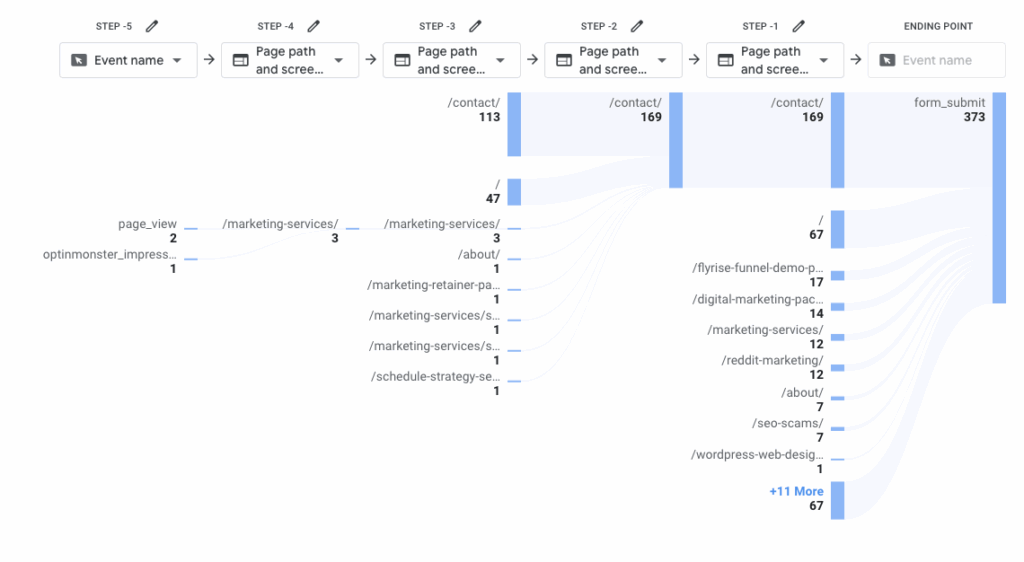
Most of the doubt small businesses feel toward their marketing starts in the analytics layer. The tools may be installed, but the information they produce doesn’t reflect what actually matters to the business.
Here are the most common breakdowns:
1. Missing or incomplete GA4 Event tracking
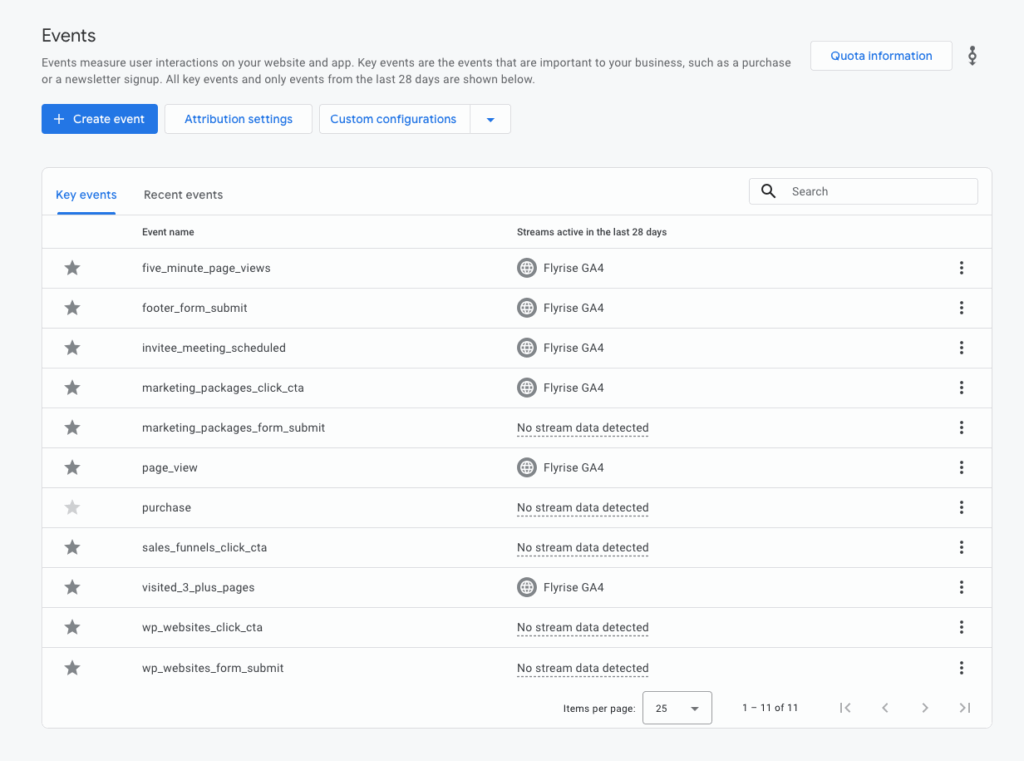
GA4 offers only the basics out of the box. Key actions like form submissions, button clicks, booking links, phone calls, and lead magnet downloads never get tracked. If the important steps aren’t measured, the entire story becomes unreliable.
If you need a clearer breakdown of what GA4 actually does and why so many small teams struggle with the switch, our GA4 setup guide walks through the essentials and explains how to transition smoothly.
2. Reports built around vanity metrics
Pageviews, impressions, and bounce rates come standard. Metrics that shape real decisions, like qualified leads or sales-driven behaviors, require a custom setup. Without them, teams judge success on activity rather than outcomes.
3. Tools that track different definitions of a “conversion”
Ads, analytics, and CRM platforms define conversions in their own way. When each system counts wins differently, confidence drops immediately because there is no shared truth.
4. Overly complex dashboards
Instead of clarity, teams get screens full of charts, filters, segments, and acronyms that feel more confusing than helpful. Complexity creates hesitation, not insight.
5. Analytics never updated as the business evolves
New funnels launch, offers change, the website gets updated. Tracking rarely keeps pace, so reports drift farther from the real customer journey over time.
When the foundation is this shaky, even good campaigns look inconsistent. Confidence fades because the numbers can’t be trusted to reflect what actually happened. And the next major breakdown usually appears in how marketing connects to sales.
The Missing Link Between Marketing and Sales
Even when analytics improve, confidence doesn’t fully return until you can see what happens after someone becomes a lead. This is where most small businesses get stuck. Marketing lives in one set of tools, sales lives in another, and nothing ties the two together.
Without that connection, it’s impossible to know which efforts actually create customers. We break down how these gaps form and how small teams can solve them in our guide to choosing between in-house vs. agency marketing models.
Attribution solves this by showing the path people take before they reach a sale. It highlights which channels consistently bring in qualified leads and which ones only create surface-level activity. When that link is missing, outcomes look random. A strong month feels like luck. A slow month feels like everything stopped working overnight.
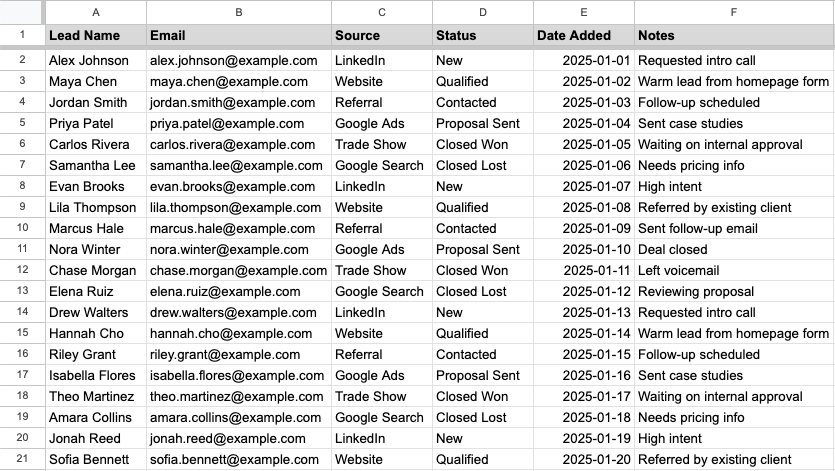
The encouraging part is that attribution doesn’t need to be complicated. A simple CRM, a Zapier workflow, or even a shared spreadsheet is enough to give small teams meaningful visibility. Once every lead has a clear source and a clear outcome next to it, patterns start to appear. You can see what’s worth investing in and what isn’t.
Attribution turns scattered activity into a story that makes sense. And once that story is clear, trust becomes much easier to rebuild.
How to Build Trust in Marketing Through Better Numbers
Once analytics and attribution are in place, the last piece is understanding the numbers that matter. This is where clarity finally clicks. Small businesses often track everything except the data that actually guides decisions, which makes even good marketing feel inconsistent.
Here are the numbers that shape confidence:
1. Cost per lead (CPL)
What you spend to generate one lead.
When you know this number, you can judge whether a campaign is performing or just burning time and budget.
2. Lead-to-sale conversion rate
The percentage of leads that become paying customers.
This number reveals whether the issue is in marketing or in the sales process.
3. Customer acquisition cost (CAC)
What it costs to bring in a new customer.
This determines how much you can safely invest in marketing without stressing the business.
4. Average value per customer
The revenue a customer typically brings in.
When this is clear, budgeting becomes easier and far less emotional.
To show how quickly these numbers build trust, consider a simple example.
If a customer is worth $500 and it costs $60 to get a qualified lead, and one out of every four leads becomes a customer, the math becomes obvious. You’re spending $240 to make $500. That is a healthy, confident decision—not a guess.
You don’t need a complicated dashboard to track this. A basic spreadsheet with a few inputs can reveal patterns that transform how you see your marketing.
Once these numbers are visible, the fog lifts. Decisions feel grounded. Trust in your marketing becomes much easier to maintain.
Research backs this up. A Deloitte survey found that 49% of small businesses increased revenue by leveraging data analytics, a reminder that clarity doesn’t just improve confidence but also improves outcomes.
A Framework for Building Trust in Marketing (Step by Step)
Clarity doesn’t happen by accident. It comes from a simple system you follow consistently. Small teams don’t need dozens of reports or expensive software to feel confident in their marketing. They just need a framework that keeps the focus on what matters and filters out everything that doesn’t.
Here’s the approach we recommend to small teams who want reliable clarity without adding more complexity:
1. Track the actions that actually matter
Most of the noise in marketing comes from tracking too much. Identify the handful of actions that signal real interest: form submissions, calls, booked consultations, downloads, or saved cart events. Measure these consistently and ignore the clutter.
2. Connect marketing activity to real outcomes
Once you know which actions matter, make sure each one is tied to a clear lead source. This could be a CRM, a simple Zapier automation, or a shared spreadsheet. The goal is a single place where every lead has a source, a status, and a result.
3. Choose three core metrics to track closely
Not ten. Not twenty. Three.
Pick the numbers that will help you understand whether your marketing is creating momentum: CPL, conversion rate, and total qualified leads are usually the best place to start. When the metrics are limited and consistent, growth becomes easier to see.
4. Run small tests instead of big debates
If you’re not sure which headline, offer, or channel performs better, test it on a small scale. A short A/B test often answers a question faster than any meeting.
5. Review once a week, not every day
Daily checks create panic. Weekly reviews create clarity. Look for patterns, not fluctuations. Most small teams gain more confidence simply by reviewing less often and with a clearer purpose.
When this framework is followed, marketing stops feeling unpredictable. The guesswork fades, and decisions become based on evidence instead of intuition. That shift alone rebuilds trust faster than any individual tactic or tool.
Rebuilding Trust in Your Marketing Over Time
Trust doesn’t return all at once. It builds as your visibility improves. Clear analytics give you a reliable starting point. Attribution fills in the middle so you can see what’s actually driving results. Your core numbers show whether your marketing is moving the business forward or just making noise.
With that foundation, patterns start to appear. Decisions feel steadier. The guesswork shrinks. Instead of hoping your marketing is working, you can actually see it working.
If you want guidance on putting a system like this in place, you can book a free strategy session with Flyrise. It’s a simple way to get clarity on your next steps and understand where your marketing can create more impact.
Until then, track what matters, keep your focus tight, and let your confidence grow one clear step at a time.

 Hey there, (first name)!